

Urban Story Drive / Field notes

Play the city with a clearer plan

This Gameplay Guide is a practical way to approach an Android open-world crime and city-exploration game with more attention and less guesswork. Urban Story Drive is an English, Canada-focused informational website: these notes focus on what your own session shows you, not shortcuts, hidden unlocks, or universal outcomes.

A wet nighttime city street leading toward a distant amber-lit intersection
01First read

Start here

Read the session before you chase it

Let the screen set the agenda

When a session loads, give yourself a short pause before committing to a direction. Look for the clearest immediate cue: it may be an objective, a control prompt, a marker, a menu choice, or simply a nearby point of interest. A visible instruction is more useful than a guess about what ought to happen next. Choose one cue you understand, and let it establish a calm starting point instead of trying to decode every part of the screen at once.

Make unfamiliar controls low-stakes

Use a quieter moment to test how movement, camera behaviour, and interaction responses feel on your own Android device. Begin with small, reversible inputs and notice what each one changes. This is not about finding a universal control layout; it is about building comfort with the version in front of you. A little control familiarity can make a later decision feel deliberate rather than hurried.

02 / Session rhythm

A steady rhythm for early sessions

01

Orient before committing

Take a brief look around and decide what deserves attention first: learning the area, following an available prompt, or settling into the controls. Orientation is not wasted time. Nearby visual cues can give a session context, even if you are not sure what comes next. A few attentive seconds can prevent a rushed choice made without a sense of place.

02

Choose one short intention

Set one modest intention for the current session: perhaps become more comfortable moving through an area, or attempt the clearest available objective. One intention makes the feedback easier to read. If the game presents a more understandable cue, you can change course without treating that shift as a failure. The point is not to force a result, but to make the next decision easier to understand.

03

End with a useful note

Before you leave the session, notice one thing you learned about a route, a control response, how an objective is presented, or the surrounding city. It can remain a simple mental note rather than becoming a tracking system. That small recall gives the next session a practical place to begin instead of making every return feel like a complete reset.

Carry one observation forward, and the next start becomes less scattered.

03 / City context

Learn the city through repeat visits

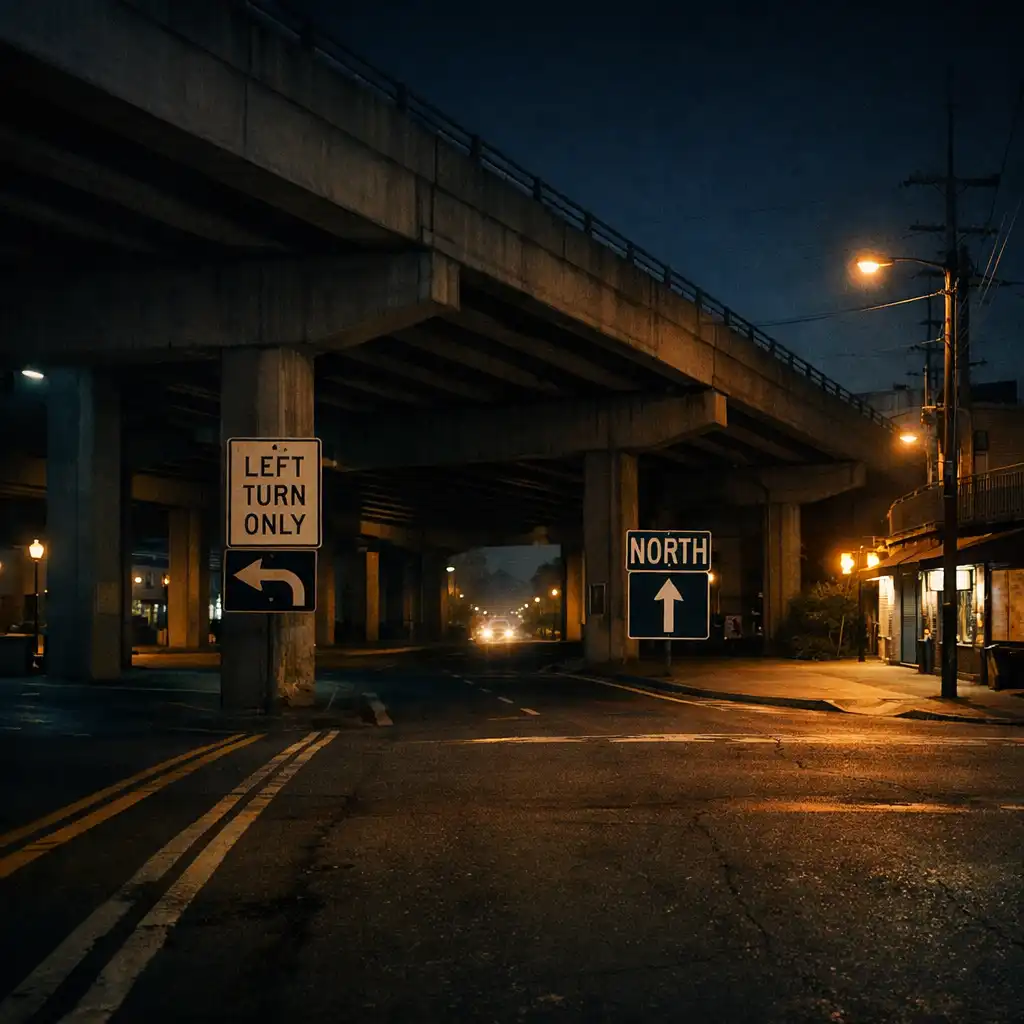
A night-time overpass and side street showing several possible routes through the city

Route awareness

Notice routes, not just destinations

Revisiting visible streets, junctions, open spaces, and recognizable scenery can make navigation feel more deliberate, even when there is no fixed objective in mind. Notice what feels easy or awkward to return to, and which pieces of scenery help you understand where you are. Familiarity with a route can reduce rushed decisions because you are responding to a place you have already read, not only to a destination you want to reach.

Give wandering a purpose

Free movement can stay useful when it is guided by a question rather than a promise of discovery. You might ask:

  • Which area would be worth revisiting when I need orientation?
  • How does this visible route feel when I take it more slowly?
  • What prompts or context appear when I move with a clear purpose?

When you want a deeper place-focused reading path, the City & Exploration guide looks at reading the urban environment and making exploration more intentional.

Continue with City & Exploration Read the City and Exploration guide
04Attempts

Practical decisions

Treat an attempt as information


Read the objective in plain language

Before beginning, restate the visible instruction in simple terms and then notice what changes after your first action. If your version offers clarification on screen, check it before filling gaps with assumptions. A plain-language reading reduces rushed interpretation: it asks you to focus on what is currently shown, not on how you think an objective must be triggered, timed, or scored.

Separate a hard attempt from a bad plan

An unsuccessful attempt can still tell you something useful. The issue may be understanding, timing, route choice, control comfort, or simple unfamiliarity with the current situation. Instead of changing everything at once, adjust one decision and see what that reveals. That measured approach makes the next attempt easier to interpret.

  • Understanding the visible instruction
  • Timing a chosen action
  • Reading a possible route
  • Settling into controls
  • Learning the situation itself

05 / Movement

Drive for information, not just speed

Learn the feel before demanding precision

Use calmer moments to understand how movement and direction feel on your device before relying on fine control under pressure. The useful lesson is personal, not technical: notice where an input feels comfortable and where it needs more care. That comfort gives you more room to make deliberate choices when the scene asks for attention.

Read the route in front of you

When the scene gives you room to look ahead, notice visible space, intersections, and changes in the environment before reacting at the last moment. Route reading is a transferable habit, not a claim about any fixed road system. It helps turn movement into an observed decision rather than a reflex.

A calmer route read can be more useful than a faster input.

Next routeRead the dedicated Driving guide
An anonymous dark car travelling along a rain-dark road with city lights ahead

07 / Field note

Keep these four checks close

01

Check the visible prompt

Ask whether the game is showing an instruction, marker, menu choice, or another clear cue worth understanding before you react.

02

Choose one intention

Decide whether this session is for comfort, orientation, an available objective, or a closer look at an area.

03

Change one decision after a setback

Adjust timing, direction, understanding, or control comfort without assuming the entire approach is wrong.

04

Follow the question, not the noise

Use the focused guides above when you need deeper context. A clear question is a better companion than a rushed assumption.

08 / Closing note

The useful habit is attention

A better session begins with what is in front of you. Read the current situation, choose a manageable intention, use the city as context, and let each attempt reveal the next useful question. Your own visible version of the game is the immediate evidence worth trusting. That mindset does not promise shortcuts; it gives you a calmer way to adapt, then decide whether you want to keep reading or check the official listing.

Official path

Check the official listing

When you are ready to check current availability and installation details, open the official Google Play listing. This link takes you outside Urban Story Drive to Google Play.